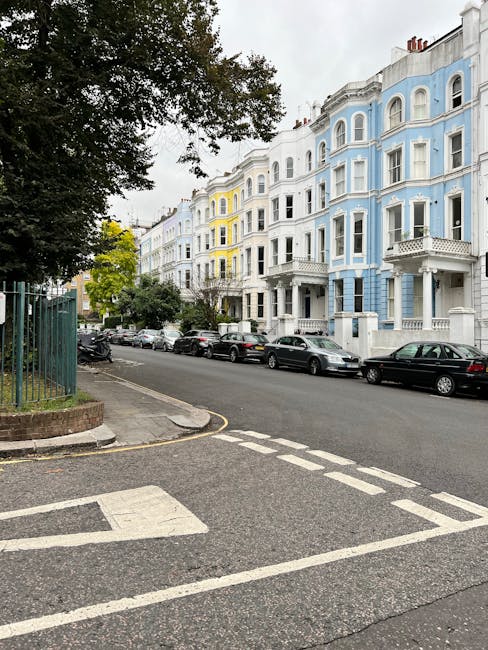
Greenwich Council Permits: Removals and Double Yellow Rules
Posted on 12/07/2026
If you are moving home in Greenwich, parking can become the part of the day that causes the most stress. Boxes are ready, the kettle is packed away, and then you realise the van has nowhere sensible to stop. That is where Greenwich Council Permits: Removals and Double Yellow Rules come in. Whether you are arranging a full house move, a flat clearance, or a smaller man and van job, understanding permits, loading restrictions, and double yellow lines can save time, money, and a fair bit of frustration.
This guide breaks down how parking permissions usually work, what double yellow lines mean in a removals context, and how to plan a move without turning the pavement into a scramble. We will also cover the common mistakes people make, when a permit is likely to be needed, and how to prepare so your moving day feels organised rather than improvised. To be fair, a little planning here goes a very long way.
Why Greenwich Council Permits: Removals and Double Yellow Rules Matters
On moving day, the vehicle is the backbone of the whole job. If the van cannot park close enough to the property, every part of the move slows down. That means more lifting, more time on the street, more chance of damage, and sometimes more cost. In an area like Greenwich, where streets can be busy, narrow, or already lined with parked cars, this is not a minor detail. It is the difference between a smooth handover and a day full of unnecessary waiting.
Double yellow lines add another layer. They are often misunderstood as a total no-go for every vehicle, all the time. In practice, things can be more nuanced for loading and unloading, but not in a casual or careless way. You need to know what is allowed, how long loading can realistically take, and when a permit or exemption is sensible. If you get this wrong, the knock-on effect can be awkward at best and expensive at worst.
For local removals, the issue is not just the legal side. It is also about logistics. A van parked well can shorten carry distance, reduce strain, and keep fragile items safer. A van parked badly can turn a straightforward sofa move into a long carry down a wet pavement at 8:30 in the morning. Not ideal.
It also matters for neighbours and traffic flow. A considerate move is less disruptive, and in residential streets that goodwill counts. People remember the person who blocked a driveway for an hour. They also remember the crew who were organised, quick, and out of the way.
How Greenwich Council Permits: Removals and Double Yellow Rules Works
The basic idea is simple: if your removals vehicle needs to stop in a restricted area, you need to check whether that stop is allowed and whether a permit is required. But the detail matters. Different streets, different times, and different traffic orders can change what you can do. Some moves are perfectly fine with careful loading on a double yellow line for a short period; others need formal permission because the vehicle would otherwise be contravening a local restriction.
In practical terms, the process often comes down to four questions:
- Can the van stop close enough to the property without causing obstruction?
- Is the stop on a controlled parking restriction, such as double yellow lines or permit-holder bays?
- Will the loading take place within any local allowance that might apply?
- Is the move likely to need a formal parking permit or a traffic management plan?
If you are not sure, do not guess. A quick assumption can be costly. Councils and enforcement teams tend to care more about what actually happened than what you meant to do. That sounds blunt, but it is the reality.
One useful way to think about it is this: a permit is not just paperwork. It is part of the move plan. The same goes for double yellow lines. They are not an afterthought, especially if your property sits on a street where parking is tight or where access changes by time of day.
If you are planning a larger relocation, it can help to read practical moving guidance too, like moving house without the usual chaos and decluttering before the van arrives. Those little preparations often make permit planning easier as well, because there is simply less to carry and less time wasted at the kerb.
Key Benefits and Practical Advantages
Getting the parking side right brings surprisingly wide benefits. It is not just about avoiding a ticket, although that alone is reason enough for most people. It is about control, speed, and confidence.
- Shorter loading times: the closer the van gets, the faster the move runs.
- Less physical strain: fewer steps from door to vehicle means less heavy carrying.
- Lower risk of damage: furniture is moved fewer times, so there is less chance of knocks.
- Fewer delays: the crew can work steadily instead of stopping to re-park or rearrange.
- Better neighbour relations: a tidy, planned move is less disruptive on a busy street.
There is also a cost angle. Even when a permit itself is not expensive, the time lost to poor parking can quickly eat into labour and schedule efficiency. If you have paid for movers by the hour, those little delays matter. If you are doing it yourself, they matter just as much, because your own energy is the budget.
And then there is peace of mind. Truth be told, many people only realise this once the move is underway. When the van is legally placed, the boxes can come out in an orderly way. The whole morning feels calmer. Less panic. Fewer shouted instructions. More getting on with it.
Who This Is For and When It Makes Sense
This topic is relevant to far more people than you might think. It is not only for large removals trucks or long-distance moving companies. In Greenwich, even a small flat move can run into parking issues if the street is tight or the nearest legal bay is already full.
You will especially want to pay attention if you are:
- moving from a flat with limited front access
- relocating from a terraced house on a narrow road
- moving furniture that needs close vehicle access, such as wardrobes or beds
- using a large van that cannot easily circle the block
- arranging an office move with timed loading windows
- trying to complete a same-day move with very little margin for error
For students, tenants, and anyone moving in and out of shared buildings, the parking side can be especially messy. You may only have a short slot to load items before the building gets busy again. In those cases, it is sensible to plan the vehicle location before you pack the final box. A useful companion read is small-flat moving tips for tighter streets, because small moves can still create big access problems.
It also makes sense for anyone moving specialist items. If you are shifting a piano, for example, parking too far away quickly becomes a problem. You will not want to drag a heavy instrument over a long distance and around parked cars. In that situation, professional help such as piano removals support can be far more practical than trying to improvise on the day.
Step-by-Step Guidance
Here is a straightforward way to approach the parking side of your move without overcomplicating it.
- Check your property frontage. Look at the road outside the address and decide where a van could realistically stop without blocking driveways, crossings, or junctions.
- Identify restrictions. Note double yellow lines, resident bays, loading bays, single yellows, and any time-based restrictions. Photographing the street can help later.
- Estimate loading time. Be honest. If the move involves stairs, fragile items, or a long carry, add buffer time. People usually underestimate this part.
- Decide whether a permit is needed. If legal stopping is uncertain, or the road is heavily controlled, plan for a permit or a formal parking arrangement.
- Coordinate the van size. A smaller vehicle may be easier to place close to the property, especially on narrow streets. That can matter more than people expect.
- Prepare the items first. Have furniture dismantled, boxes sealed, and fragile pieces wrapped before the van arrives. The clock starts quickly once the doors open.
- Keep an eye on timing. If parking on double yellows is being used for loading, the work should be active and continuous. Long pauses can create problems.
- Leave room for a backup plan. If the prime spot is taken, know where the next workable place is before the van turns up.
If you want a better rhythm for the rest of the day, it helps to think in stages: pack, carry, load, check, move on. Simple. A little old-fashioned maybe, but it works.
For especially bulky items, the steps become even more important. Our guide to moving bulky items through narrow streets is useful if your road feels more like a puzzle than a road. And if you are carrying heavy items alone before movers arrive, safe solo lifting tips can help you avoid doing something daft in a rush. We have all seen that moment where someone says, "I can get it down the stairs myself," and then immediately regrets it.
Expert Tips for Better Results
A few field-tested habits can make the whole process cleaner and safer. These are not fancy tricks. Just the sort of thing that keeps a move from becoming chaotic.
- Do your parking homework the day before. Streets change throughout the week. A spot that looks fine on Tuesday morning may be useless on Friday afternoon.
- Measure the carry distance. If the van must park two doors away, factor that into timing and staffing.
- Use one person as the parking lead. Too many opinions at the kerb can slow everything down.
- Keep documents easy to reach. If a permit or booking reference is needed, do not leave it buried in a moving box. That would be grim.
- Protect both property and pavement. Use trolley wheels, blankets, or lifting aids where appropriate so the route between house and van stays tidy.
- Build in weather slack. Wet steps, drizzle, and slippy pavements all slow loading. London weather likes to add drama at inconvenient moments.
It also helps to think about item type. For example, if you are moving a mattress, the path to the van matters as much as the vehicle space itself. A long walk through a communal hallway can be more awkward than the actual carry. Our piece on moving beds and mattresses more easily is useful for that kind of planning.
And if the move involves fragile or awkward furniture, a professional crew with the right equipment is often worth the expense. The handling matters, but so does the timing around the vehicle. That combination is what keeps the day calm.

Common Mistakes to Avoid
Most parking problems during removals come from a few repeat mistakes. The good news? They are avoidable.
- Assuming double yellow lines are always fine for as long as you need. They usually are not. Loading needs to be active and proportionate.
- Forgetting nearby junctions or crossings. Sometimes the first "available" space is actually a bad one.
- Not checking whether the vehicle will block traffic. If the van sticks out too far, it can create safety and legal issues.
- Leaving permit arrangements too late. A last-minute scramble rarely ends well.
- Underestimating the number of trips. One walk to the van becomes three, then four. Suddenly the plan is wobbling.
- Trying to unload while someone else is still parking. That small delay can ripple through the whole move.
A less obvious mistake is failing to think about building access at the same time as road access. A good parking spot is no use if the lift is being used by another resident or the stairwell is too narrow for the biggest pieces. If that sounds familiar, a look at safe stairwell moving advice for older homes may be worth your time.
Another common one? Packing too slowly. The van arrives, and people are still taping boxes. It happens. But it can turn a neat parking arrangement into a race against the clock.
Tools, Resources and Recommendations
You do not need expensive gear to manage a move well, but a few practical tools make the parking and loading side much easier.
- Phone camera: take street photos, signs, and bay markings before moving day.
- Basic floor plan or room list: helps you know what should be closest to the door.
- Labels and markers: faster loading means less time on restricted parking.
- Trolley or sack truck: useful if the van must stop a little further away than planned.
- Blankets and straps: reduce damage and stop items shifting during short carries.
- Checklist on paper: simple, old-school, and hard to miss when the battery dies.
For broader moving preparation, these resources can help: packing methods that save time, pre-move cleaning practices, and route planning ideas for local moves. Different topic, same principle: less uncertainty on the day.
If you are comparing support options, it may also be sensible to review the range of removal services, or check pricing and quote information before committing. That way, you can balance convenience against budget rather than guessing.
Law, Compliance, Standards, or Best Practice
Parking and loading around Greenwich Council controlled streets should always be handled with care. The key point is simple: local restrictions still matter even when you are moving house. A move is not a free pass to ignore restrictions, and the safer approach is to assume that any stopping on a restricted street needs checking first.
From a best-practice point of view, your move should be:
- lawful: no unnecessary obstruction or unsafe stopping
- proportionate: loading should take only as long as needed
- considerate: pedestrians, neighbours, and other road users should be kept in mind
- documented: keep permit details, time windows, and vehicle notes together
- safe: avoid rushed lifting into traffic or across unsafe distances
That may sound formal, but in practice it just means being organised and not trying to wing it. If the road layout is awkward, choose the least disruptive lawful option rather than the nearest-looking space. It is better to spend a little longer planning than to spend the afternoon dealing with enforcement, missed timings, or a half-finished load.
Professional movers should also work in line with sensible health and safety practice. If you want reassurance on that side, the company's health and safety approach is a useful thing to review, especially for heavier or more complex moves. And if access is a concern, insurance and safety considerations are worth checking too. No one plans for damage, but it is better to know where you stand.
Options, Methods, or Comparison Table
There is more than one way to deal with removals parking in Greenwich. The right choice depends on the street, the size of the move, and how much risk you want to absorb yourself.
| Approach | Best For | Pros | Trade-Offs |
|---|---|---|---|
| Careful loading on an unrestricted bay or legal space | Streets with available parking | Straightforward, no special steps | Not always available near the property |
| Short loading on double yellow lines, where permitted and appropriate | Brief, active loading in lower-risk areas | Closest access, faster turnaround | Must be handled carefully and within local rules |
| Formal parking permit or arranged access | Tighter roads, longer moves, larger vans | More certainty, fewer surprises | Needs advance planning |
| Smaller vehicle or split loads | Very narrow streets or limited frontage | Easier to position, less obstruction | May require extra trips or coordination |
In many Greenwich moves, the best solution is a blend. For example, a small van may be able to stop where a larger lorry cannot, and a well-packed load can finish faster than a half-empty vehicle that keeps being re-sorted. The smartest option is not always the biggest vehicle. Sometimes it is the one that fits the street.
For people dealing with flats in busy zones, flat removals support can be especially useful because access, stairs, and parking all tend to matter at once. Likewise, if you are moving a whole home rather than a single room, house removals assistance may help keep the parking plan tied to the rest of the move.
Case Study or Real-World Example
Picture a fairly typical Greenwich move: a two-bedroom flat on a residential street, no private driveway, and only limited roadside space. The occupants want the move done before lunchtime because the keys for the new property are being handed over later that day. At first glance, the nearest parking bay looks fine, but it is already occupied by local residents. The next option is a stretch of double yellow line outside the property.
Instead of improvising, the move is planned in layers. Boxes are packed the night before. The bed is dismantled. Fragile items are set aside separately. The van arrives at a time when loading can begin immediately. Two people carry, one keeps the route clear, and the driver stays alert to timing and passing traffic. Nothing heroic. Just orderly.
The result? Fewer trips, less strain, and no frantic repositioning. A small delay at the start was avoided because the parking arrangement had been thought through in advance. That matters more than people realise. The move may still be tiring, of course. Moving always is. But it feels controlled rather than messy.
If the same move had involved antiques, the stakes would have been higher. In that situation, extra care around loading and parking becomes even more valuable, and a specialist article like relocating antique furniture safely would be the natural next read.
Practical Checklist
Use this quick checklist before moving day. It is simple, but it saves headaches.
- Confirm whether the street has double yellow lines, permit bays, or loading restrictions
- Decide where the van can stop without blocking access or traffic
- Estimate how long loading will actually take, not how long you hope it will take
- Check whether a permit or special arrangement is needed
- Keep permit details, contact numbers, and timing notes in one place
- Pack and label items before the vehicle arrives
- Measure whether the vehicle size suits the road
- Clear hallways, stairs, and entry routes
- Prepare a backup parking plan
- Brief everyone involved so nobody is asking the same question three times
If you are still early in the planning stage, a broader guide such as moving house with less stress can help you shape the rest of the move around this parking decision. And if you are short on time, same-day removal support may be worth exploring, especially when timing is the main problem.
Conclusion
Greenwich Council permits and double yellow line rules are not the glamorous part of moving, but they are often the part that decides whether the day feels smooth or scrambled. The best moves are rarely the ones that rely on luck. They are the ones where parking, access, packing, and timing have all been thought through together.
So, whether you are moving a compact flat, a family home, or a few particularly awkward pieces of furniture, make the road outside your property part of the plan from the start. That one decision can save time, reduce stress, and make the whole job feel a lot more manageable. Honestly, it is one of those details people only notice when it is missing.
Get a free quote today and see how much you can save.